I have always viewed animals through an artistic lens; however, in school, I was encouraged to pursue a more realistic style. This changed in years 9 and 10 when I had an inspiring art teacher who allowed me to experiment with different styles. Just as I was beginning to discover my artistic voice, I had to move away.
Once college ended, I decided to take a gap year to continue experimenting with my art. One day, while researching lesser-known cetaceans, I came across the Vaquita. The moment I saw it, I was inspired to draw in a style I genuinely loved for the first time. This experience rekindled my passion for protecting cetaceans, particularly those that cannot protect themselves.
I have always had a strong fascination with orcas, drawn in by their remarkable intelligence and beauty. When I was little, I visited SeaWorld Orlando, where witnessing these magnificent creatures up close was an experience I’ll never forget. It was awe-inspiring to see them glide gracefully through the water and perform jumps.
However, despite the thrill, I feel a sense of regret about my childhood visit to SeaWorld. Even as a young kid, I could feel that such large animals were being kept in spaces that were far too small to accommodate their natural grandeur and behaviors.
This reflection makes me increasingly aware of the need to protect their natural habitats and honor their wild nature, rather than merely treating them as spectacles for entertainment.
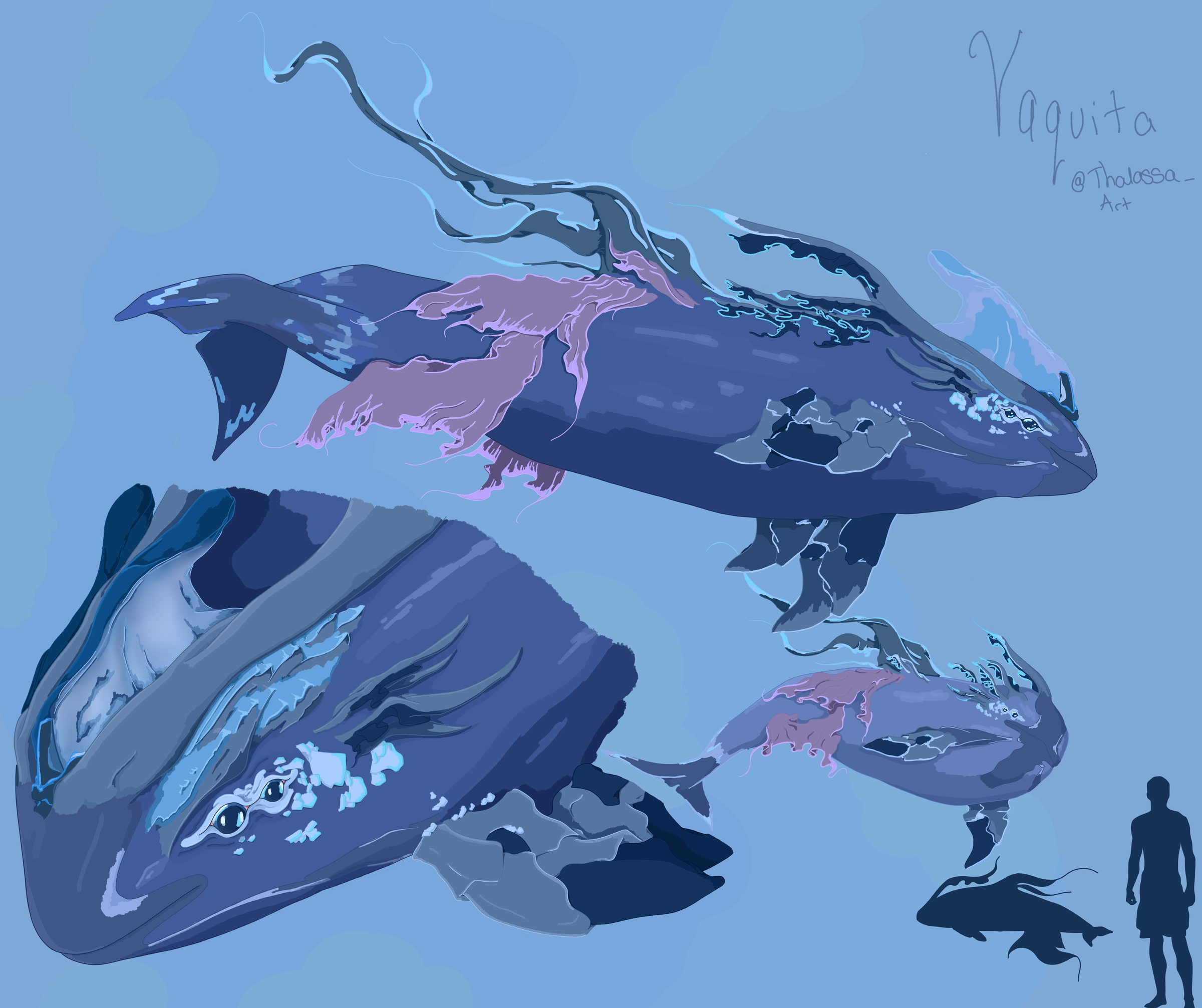
Pursuing marine biology for two years has provided me with invaluable insight into the critical status of numerous marine mammals and the threats they encounter within our oceans. I have acquired knowledge regarding the various factors contributing to their endangerment, including climate change, habitat destruction, pollution, and overfishing. My studies have further underscored the significance of coral reefs, which serve as essential ecosystems supporting a diverse array of marine life, while also acting as protective barriers along coastlines. The decline of coral reefs, attributed to bleaching events and anthropogenic activities, presents substantial risks to both marine species and coastal communities.
Orcas, commonly referred to as killer whales, hold a particularly significant interest for me. Their remarkable intelligence is a subject of fascination, and the beauty manifested in their expressive eyes is striking. What captivates me most is their ability to communicate not only through vocalizations but also on a profound emotional level, forming connections that transcend mere survival.
These majestic animals are distinguished by their cooperative hunting strategies, wherein they collaborate as a cohesive unit to capture prey. This behavior exemplifies their social structure and mutual dependence. Moreover, the role of elder orcas within their pods is crucial; they impart essential knowledge and teaching methodologies to younger members, thereby preserving the skills and wisdom necessary for survival and thriving in the wild across generations. Observing their complex social dynamics and emotional depth only amplifies my respect for these extraordinary creatures.
This educational journey has intensified my commitment to conservation and emphasized the urgent necessity for protective measures to safeguard these vital marine environments.